
The Claim
Britain spent thirty-six million pounds growing peanuts in East Africa and harvested less than it had planted. Two years of work produced about two thousand tons of nuts, and the ships had carried in more seed than that. The plan had called for three million acres.
So how does a government with tanks, bulldozers and a fleet of ships lose to a peanut? The answer starts with a shortage of margarine, and it ends with a railway line running to nowhere. This is FactCat, meet the groundnut scheme.
The Shortage
Nineteen-forty-six Britain was a year past World War Two and still living under rationing. Cooking fats were the sore point: butter, lard, and above all margarine, measured out in ounces per person per week. The national shortfall in fats ran to something like one and a half million tons a year.
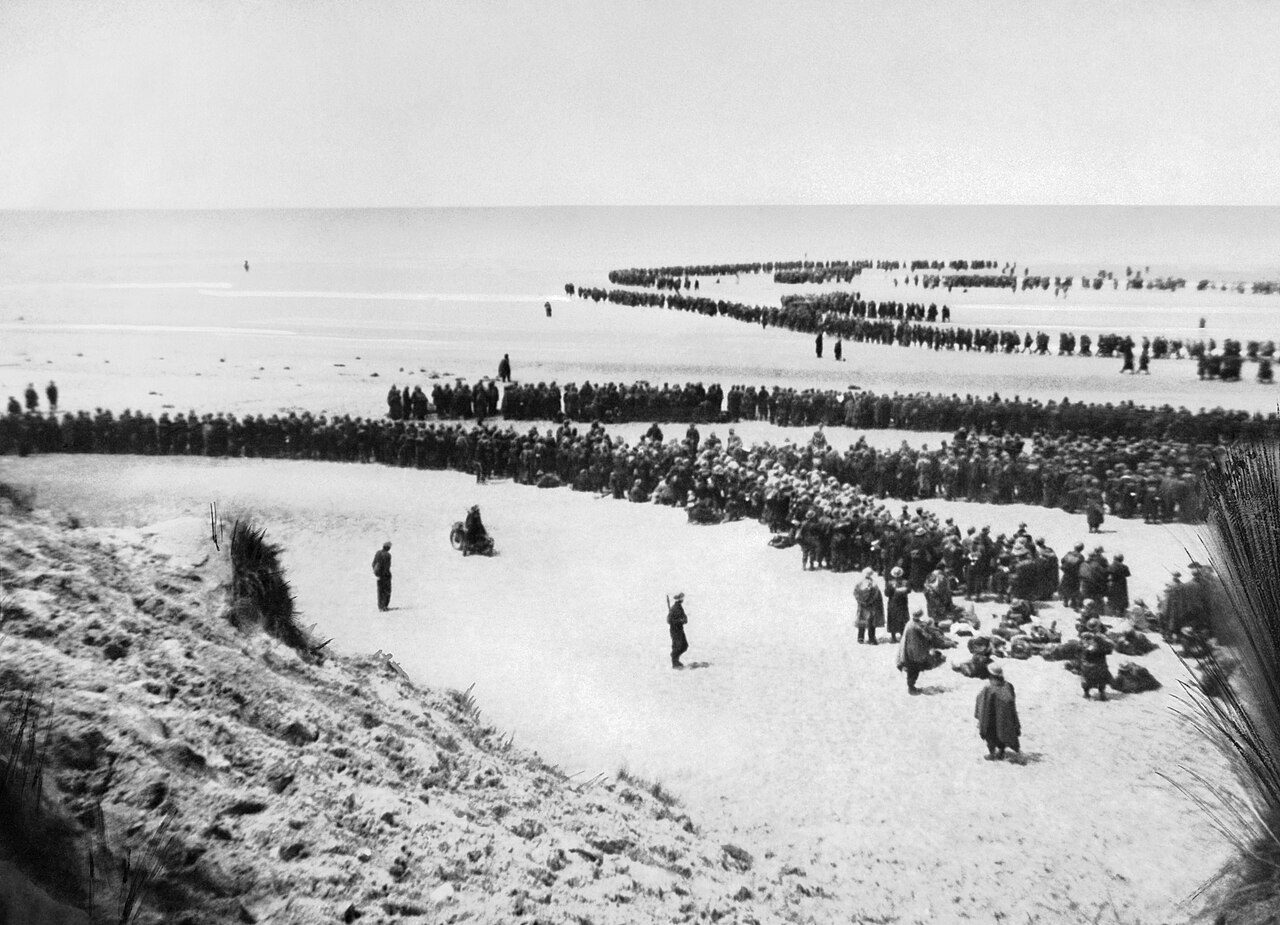
Britain could have bought oilseed from America, except it was sunk in dollar debt so deep that the economist John Maynard Keynes called the situation a financial Dunkirk, after the army's desperate wartime evacuation. So the government of prime minister Clement Attlee went looking for fat inside its own empire instead. That is when Frank Samuel, head of the trading firm the United Africa Company, arrived with an idea.
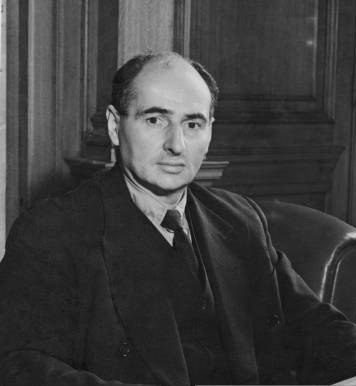
Grow groundnuts, peanuts, in Tanganyika, the East African territory Britain then held under United Nations trusteeship. He took it to the Minister of Food, John Strachey, and Strachey liked it.

The Survey
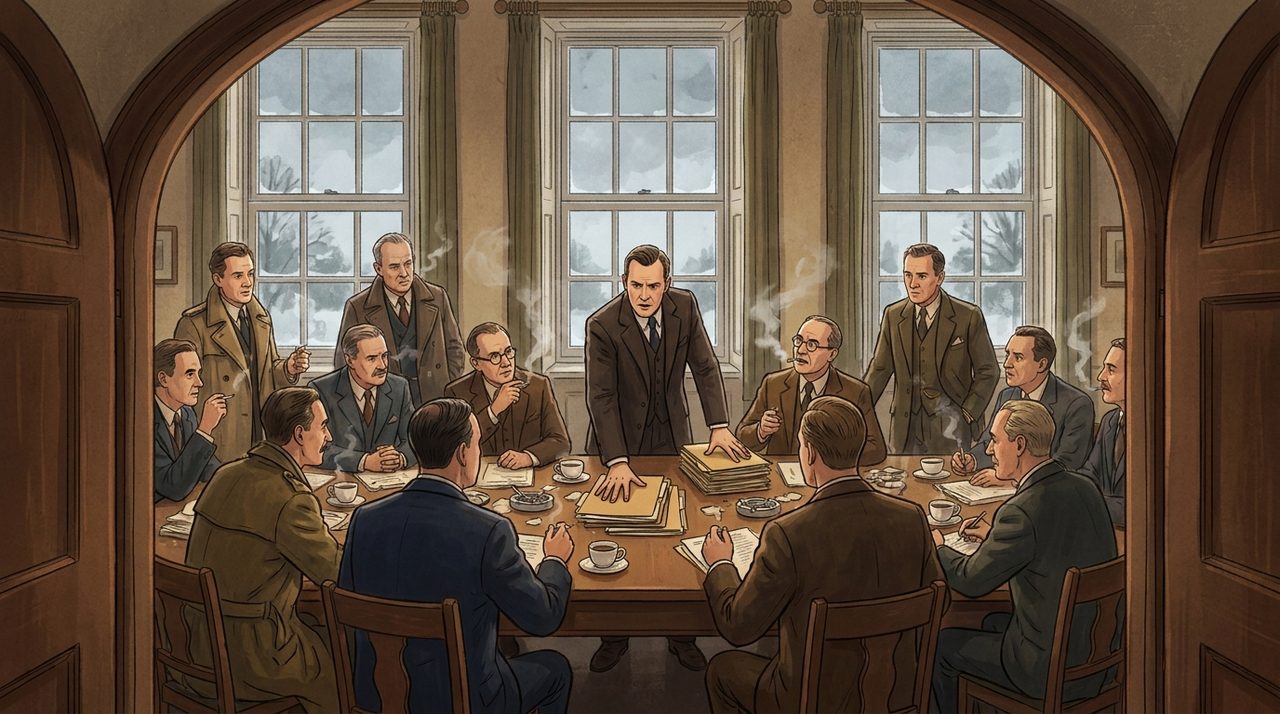
In April nineteen-forty-six the government authorised a mission to go and find the land. It was led by John Wakefield, a former director of agriculture in Tanganyika, and his team spent about seven weeks in the field. Seven weeks, to choose ground that would be measured in millions of acres.
The report came back that September, and it was enthusiastic. It recommended putting three point two million acres under groundnuts by nineteen-fifty-two, roughly twelve thousand square kilometres, an area almost as big as the English county of Yorkshire. Nobody planted a pilot farm first.
Nobody tested whether groundnuts would actually grow in the soil they had picked. The Cabinet in London approved the whole thing in January nineteen-forty-seven, and Britain started loading ships. When recruiting opened for what became known as the Groundnut Army, a hundred thousand former soldiers applied for twelve hundred places.
Eighty-three men for every job.


The Ground
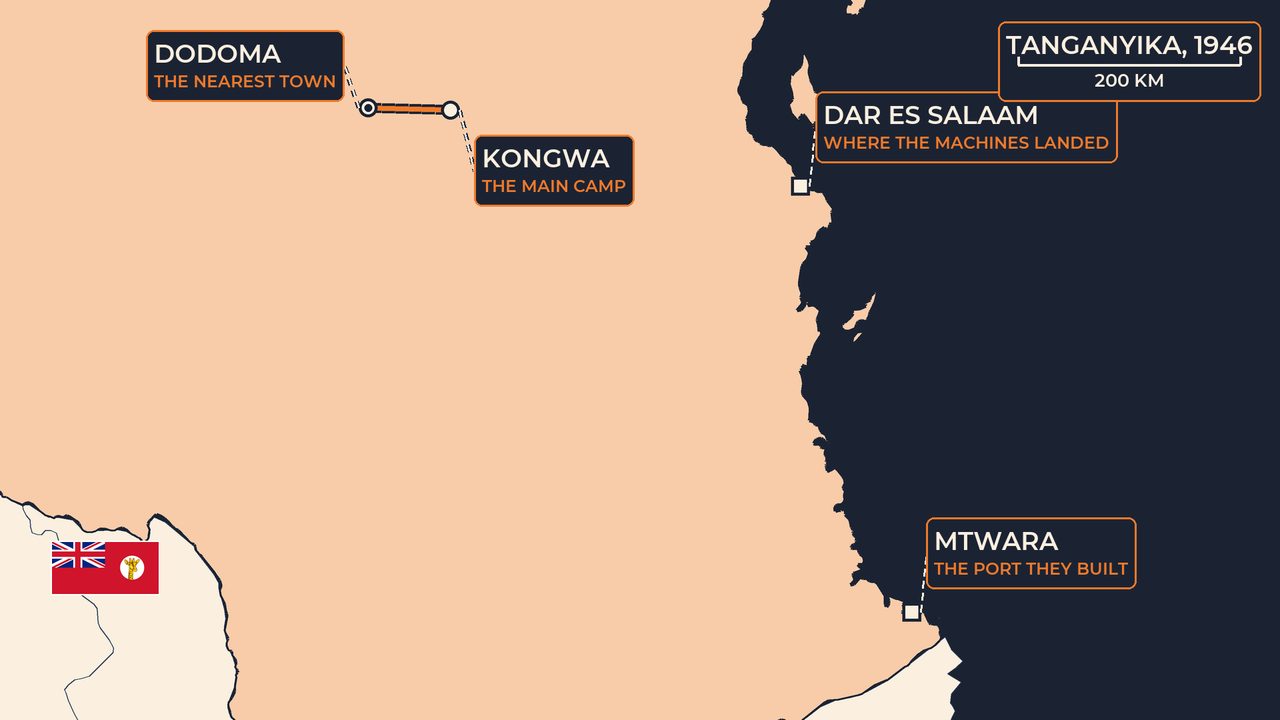
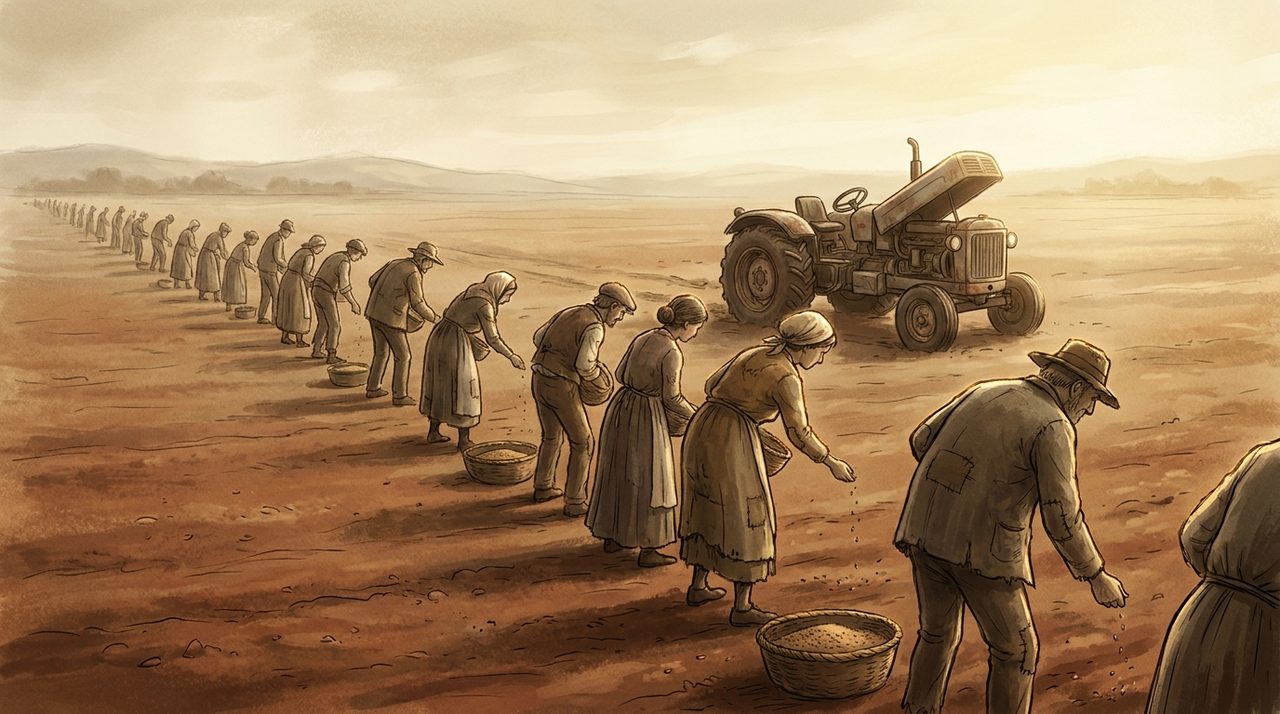
The advance party made camp at a place called Kongwa, inland from the town of Dodoma, and had a look around. The soil held a lot of clay and there was very little water nearby. They declared it suitable anyway, and built the scheme's headquarters on it.
Three years earlier Kongwa had no European residents at all. By July nineteen-forty-nine it held about thirteen hundred Europeans and eleven thousand African workers, which made it the second largest town in Tanganyika. Then they tried to clear the bush, and the accounts that survive read like a list of things nobody had costed.
The giant baobab trees did not come out of the ground, and some of them literally could not be touched: one was the local tribal jail, another was a site of ancestor worship. Others turned out to be hollow and packed with bees, and several men were hospitalised with stings. Crews ran into elephants and rhinoceroses.
The survey had taken seven weeks. The bees had been there considerably longer.
The Machines
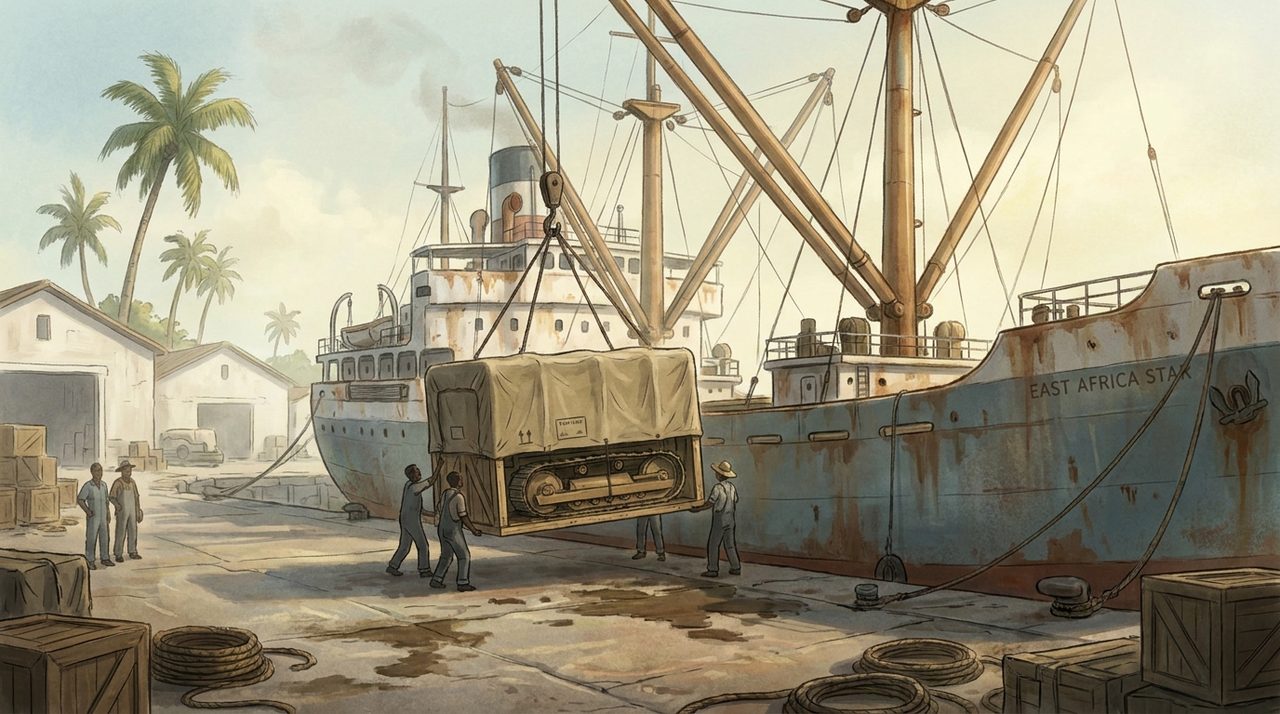
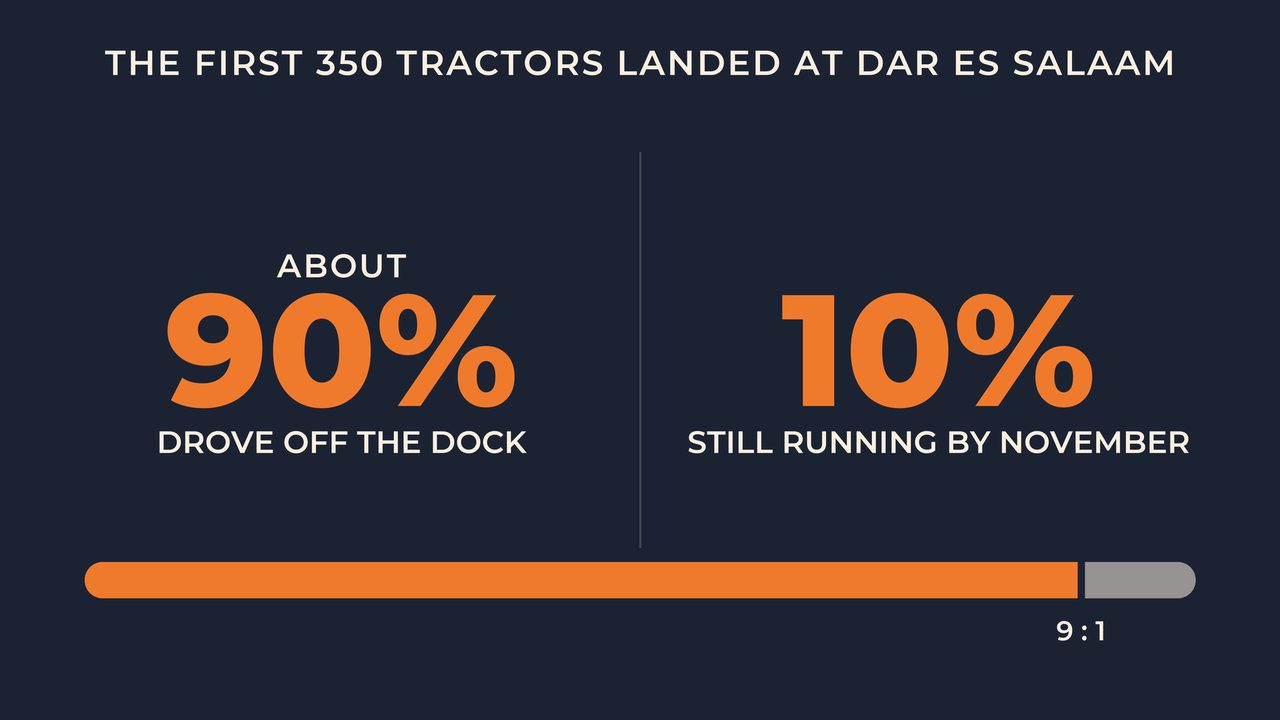
The machinery is where this gets properly strange. Heavy equipment was scarce in nineteen-forty-six, so the managers bought whatever they could find: tractors and bulldozers from Canada, and United States Army surplus tractors from the Philippines, many of which arrived too rusted to use. Of the first three hundred and fifty track tractors landed at the port of Dar es Salaam, about ninety percent drove off the dock under their own power.
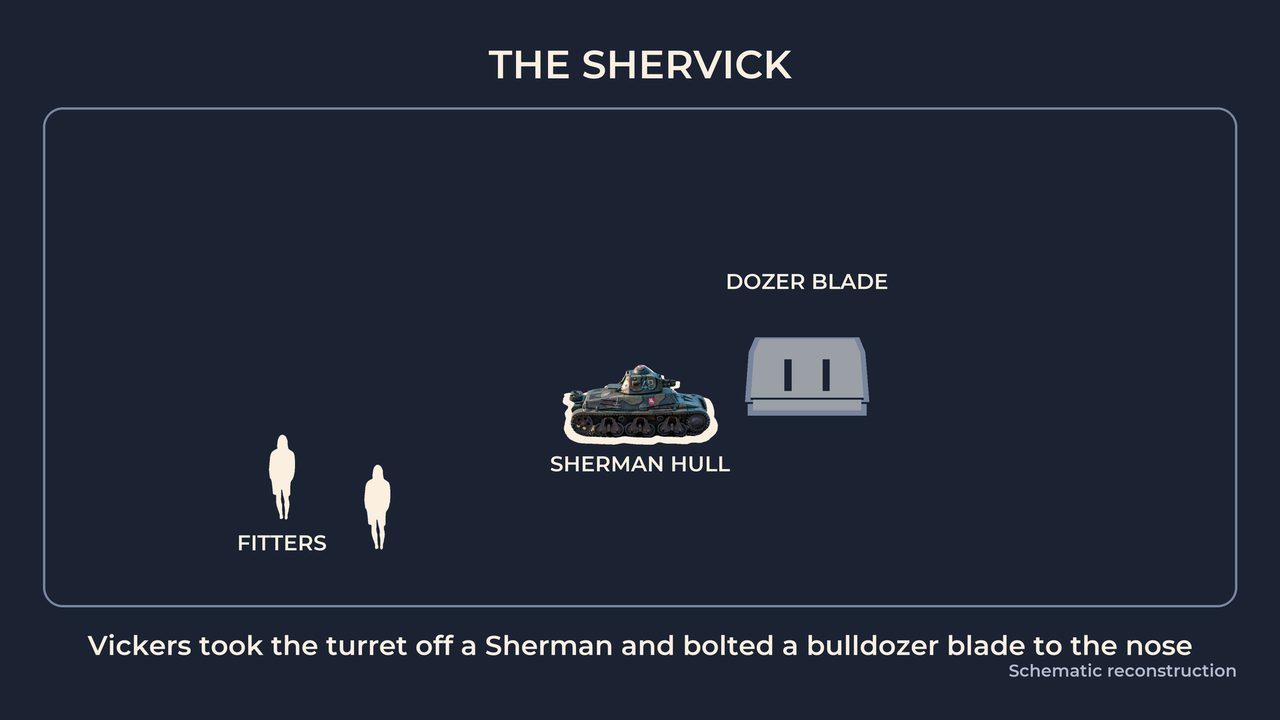
By November, ten percent were still running. By the end of that first summer, two-thirds of the imported tractors were out of action, and bulldozer blades used to rip out roots were ruined in a couple of days. So the scheme went shopping for something tougher, and settled on surplus Sherman tanks.
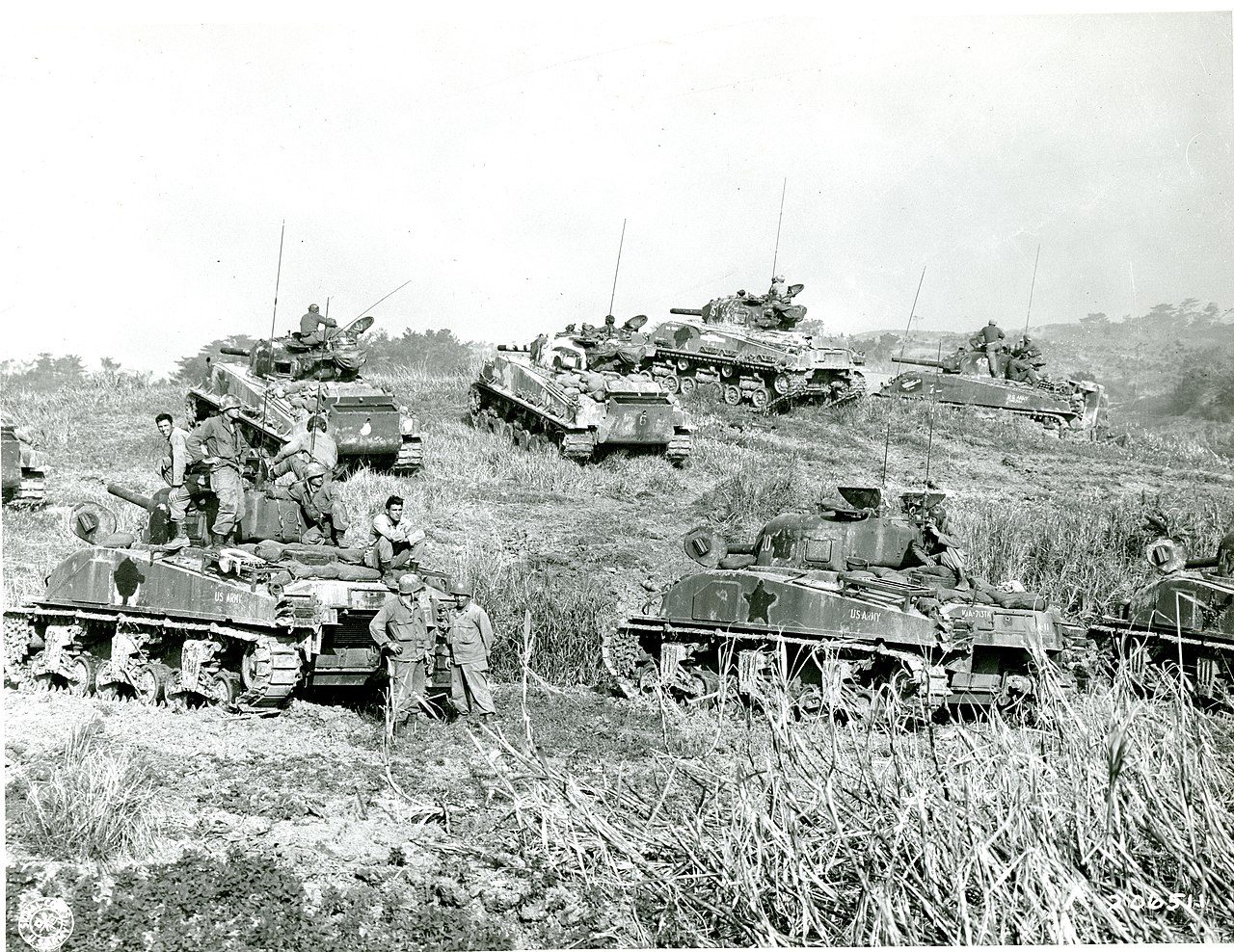
The engineering firm Vickers stripped the armour off and bolted a bulldozer blade to the nose, and the result was nicknamed the Shervick. It took four of them to pull over most trees. The bush wrecked them anyway.
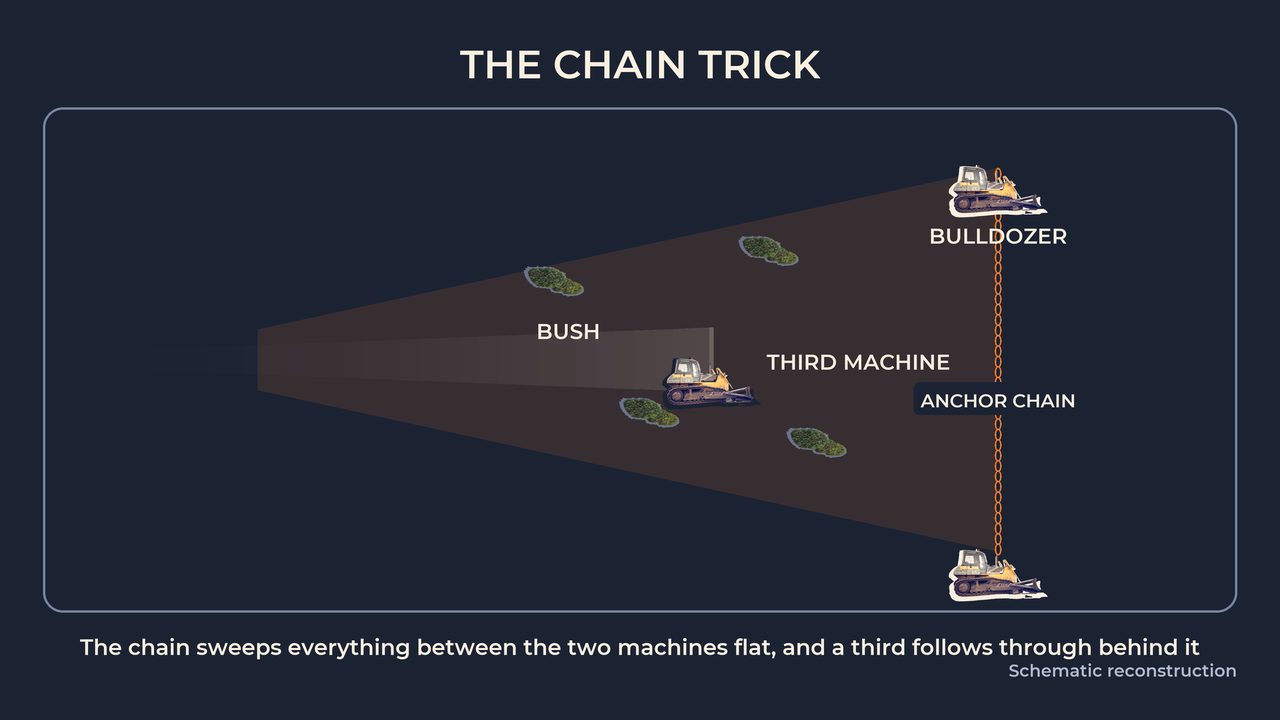
Then, down at the scheme's Southern Province site, somebody worked out the trick. Run a long ship's anchor chain between two bulldozers, drive them apart, and everything standing in between comes down, with a third bulldozer following behind to turn over whatever the chain had missed. Done properly, that cleared forty acres a day.
They sent the order for the chain to London, and the story goes that head office cancelled it, because nobody there could imagine what a farm in the African bush wanted with a ship's anchor chain. Some tellings say they took it for a joke.
The Line
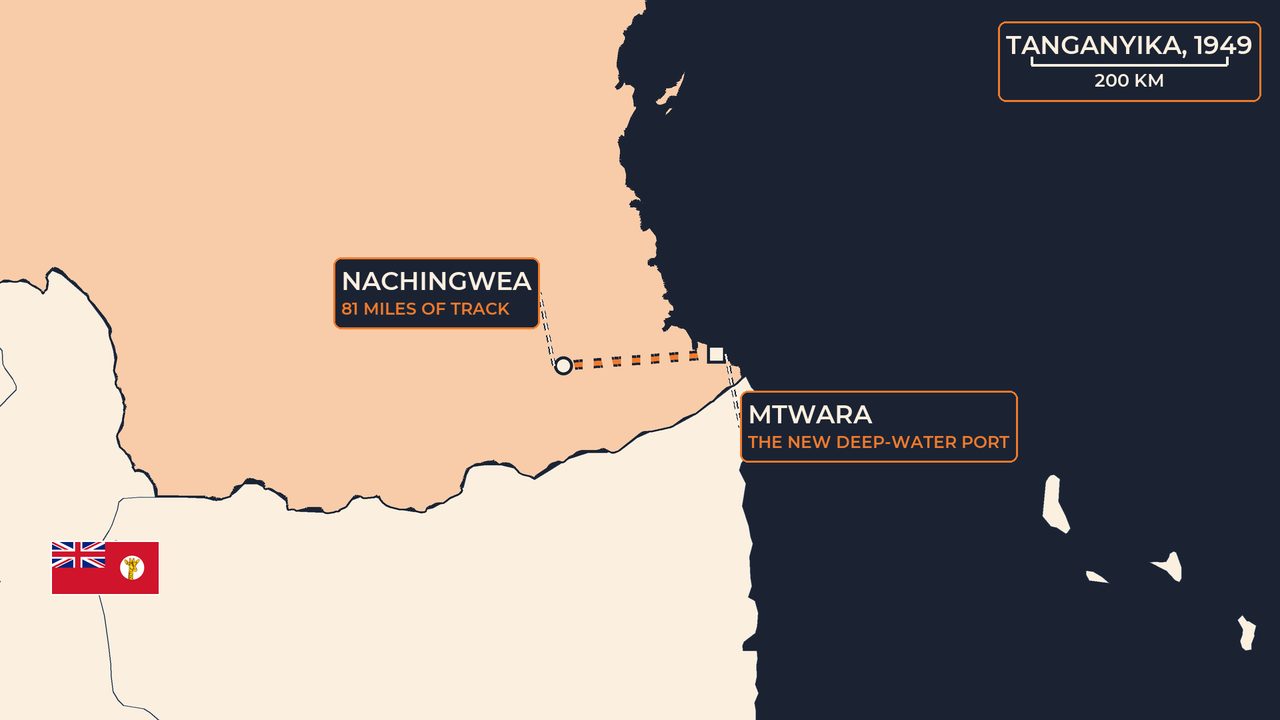
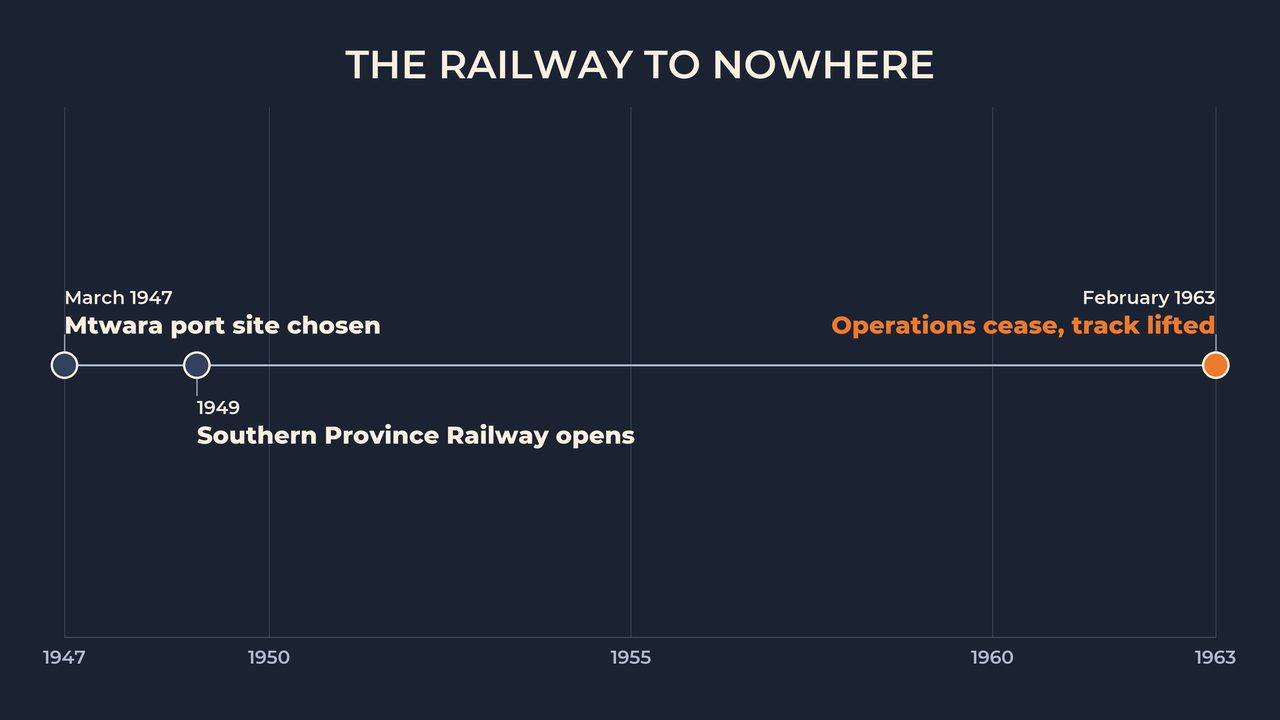
While the tractors were dying at Kongwa, London was already building the way out for the harvest. In March nineteen-forty-seven, before a single groundnut had been lifted anywhere in the scheme, a survey mission reported that a stretch of coast called Mtwara had been chosen for a brand new deep-water port. Then came the Southern Province Railway: about eighty-one miles of single narrow-gauge track running inland, opened in nineteen-forty-nine, built for one purpose, to carry groundnuts down to the sea.
Beside it ran a fuel pipeline of roughly a hundred and twenty-eight miles, feeding tanks that held twenty-four thousand tons. The port was finished. The line was finished.
The crop NEVER came. That railway never transported the harvest it was built for, and in February nineteen-sixty-three operations ceased and the track was taken up. And all the while, in the paperwork back home, one number kept its magic: six hundred thousand.
Six hundred thousand tons of groundnuts off three and a quarter million acres, for twenty-three million pounds. Then six hundred thousand off two and a quarter million acres, for sixty-six million. Then two million acres, for forty-six million pounds.
And at the end, six hundred thousand acres, for forty-eight million pounds. Same figure, first counted in tons of groundnuts, later in acres of Africa. Of the three million acres in the original plan, forty-seven thousand were ever cleared.
The Harvest
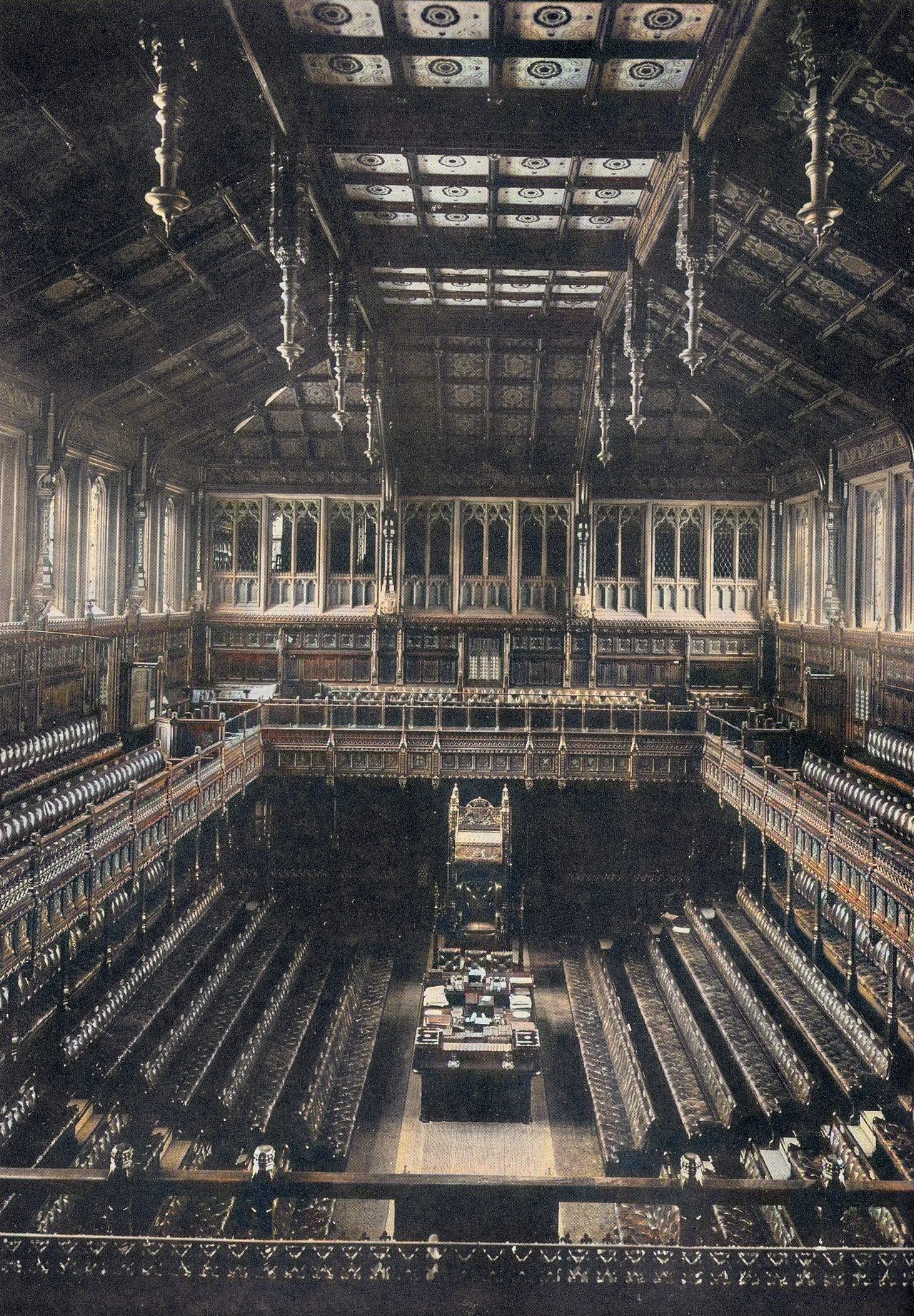
In the plan, the first real crop, due in May nineteen-forty-eight, was fifty-six thousand tons. What actually came in was, in the words of the Member of Parliament Sir John Barlow, very small indeed. Probably just enough, he told the House of Commons, to supply the seed for the following year.
The acreage told the same story. For the planting season of Christmas nineteen-forty-seven the estimate was a hundred and fifty thousand acres. They planted seven thousand three hundred.
The next season, six hundred thousand acres planned, about fifty thousand planted. The season after that, one and a quarter million planned, about a hundred and twenty thousand expected. Then nineteen-forty-nine brought drought.
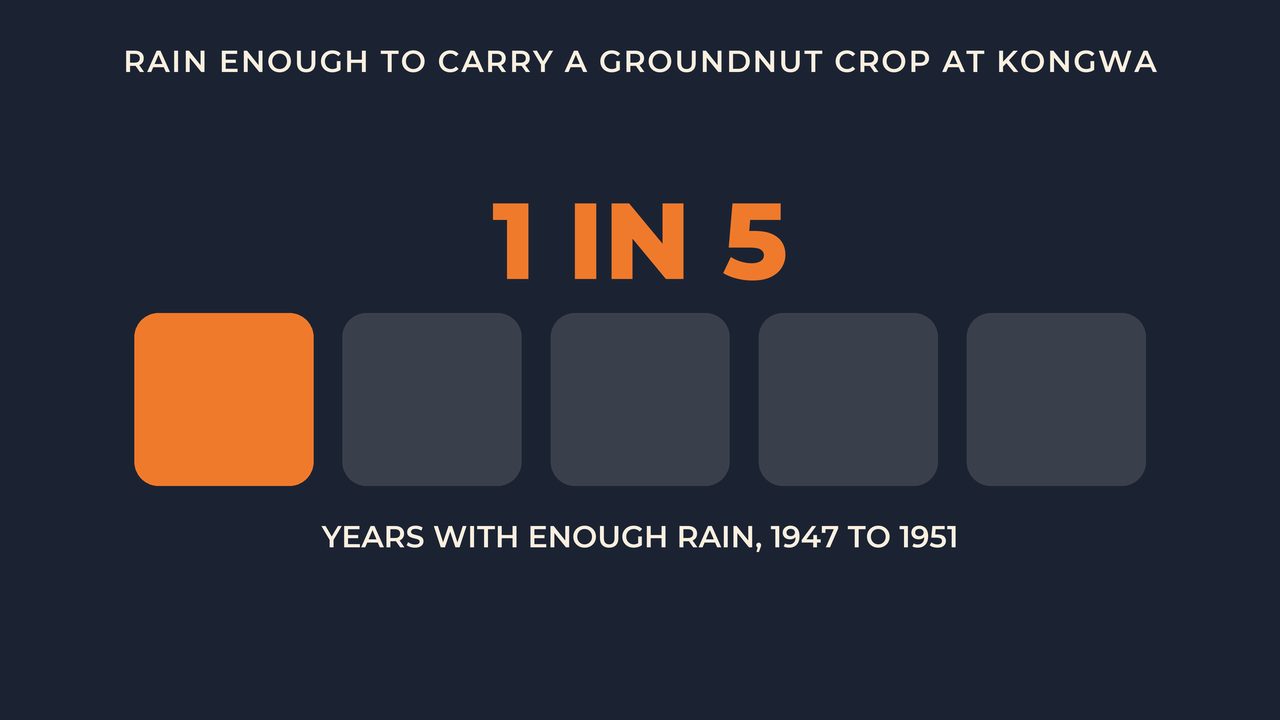
Across the years from nineteen-forty-seven to nineteen-fifty-one, the rain at Kongwa was enough to carry a groundnut crop exactly once in five years. And when the hot season arrived, the clay in that soil baked into a crust so hard the crews could barely lift the nuts out of it. The yield came in at about two hundred pounds an acre.
The plan had assumed seven hundred and fifty. The estimate for that harvest was roughly a quarter of a million tons of groundnuts. What came in was… rather over two thousand tons.
Barlow read both figures into the record in July nineteen-forty-nine, after two visits to the estates, and said plainly that there was no point having any real difference on the figures. Two thousand tons, against a quarter of a million. Less than the seed the ships had carried in to plant it.
Barlow also itemised who was actually out there. Of about nine hundred European men at Kongwa, roughly sixty worked on the agricultural side. A hundred and seventy were in the repair shops keeping the machines alive, fifty were storemen, a hundred and twenty were in administration and hospitals.
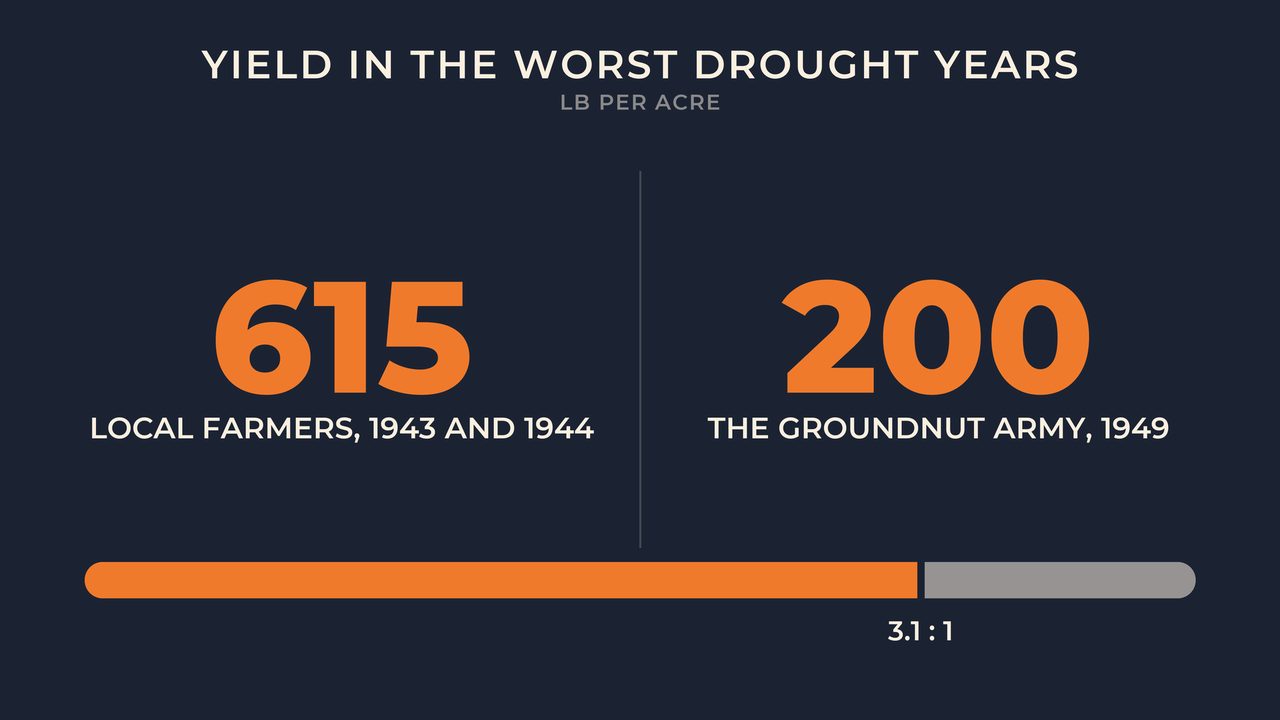
Nearly three times as many men were nursing the equipment as were growing the crop. And it gets sharper. In nineteen-forty-three and nineteen-forty-four, years the Wakefield report itself called the worst on record for drought, local farmers averaged six hundred and fifteen pounds an acre.
Three times what the Groundnut Army managed with its tractors, its converted tanks and its brand new port. The scheme switched to sunflowers, which turned out to handle drought even worse. And over those same years, private traders shipped one point three million tons of groundnuts to Britain from West Africa, six hundred and fifty times the best year the scheme ever had.
As for the margarine that started all this, Barlow did that sum too. Even the scheme's own target of seven thousand tons would have covered no more than two percent of the ration.
What Grew Instead
In January nineteen-fifty-one the Treasury wrote off thirty-six and a half million pounds. The cleared land went to African farmers, who made it pay with tobacco, cashews and cattle. Britain shipped an army and a railway across the world for a harvest that never filled them.
Survey twice, plant once. FactCat, out.